


Knee Replacement Surgery
Knee Replacement Surgery in Kansas City, MO: Advanced Care for Lasting Relief
Specialized Orthopedic Knee Injury Treatment in Kansas City, MO
At Orthopedic Health of Kansas City, we understand that knee injuries can significantly impact your life, whether you’re an athlete, a weekend warrior, or leading an active lifestyle. Our dedicated team specializes in diagnosing and treating a wide array of knee injuries, ensuring you get back to your routine with confidence.
If chronic knee pain is limiting your ability to walk, work, or enjoy daily life, knee replacement surgery may be the solution. At Orthopedic Health of Kansas City, our experienced orthopedic specialists provide advanced knee replacement surgery in Kansas City, MO, helping patients regain mobility, reduce pain, and return to the activities they love. Whether your knee pain is caused by arthritis, injury, or long-term wear and tear, our team offers personalized treatment plans designed for long-term success and improved quality of life.
What Is Knee Replacement Surgery?
Knee replacement surgery, also known as total knee arthroplasty, is a procedure in which damaged cartilage and bone in the knee joint are removed and replaced with artificial components. These implants are designed to restore smooth joint movement, improve stability, and eliminate pain caused by conditions like osteoarthritis or rheumatoid arthritis.
Patients considering knee replacement surgery in Kansas City, MO often experience persistent pain, stiffness, swelling, or decreased range of motion that does not improve with conservative treatments such as physical therapy, medications, or injections. Over time, this can significantly impact daily function and independence.
Common Causes of Knee Pain Leading to Knee Replacement
Many patients who undergo knee replacement surgery in Kansas City have been dealing with chronic knee conditions for years. The most common causes include osteoarthritis, which is the gradual breakdown of cartilage in the knee joint, and rheumatoid arthritis, an autoimmune condition that causes inflammation and joint damage.
Other contributing factors may include prior sports injuries, ligament damage such as ACL tears, fractures, or repetitive stress on the joint. As these conditions progress, patients may notice worsening pain with activity, difficulty walking or climbing stairs, and reduced quality of life. When non-surgical treatments no longer provide relief, knee replacement surgery becomes a highly effective and reliable option.
Signs You May Need Knee Replacement Surgery in Kansas City, MO
Recognizing when it’s time to consider surgery is important. You may be a candidate for knee replacement surgery in Kansas City, MO if you experience ongoing knee pain that interferes with daily activities, stiffness that limits movement, or swelling that does not improve with rest or medication.
Other signs include difficulty standing or walking for extended periods, knee instability, grinding sensations within the joint, or pain that disrupts sleep. Many patients also find that their knee pain prevents them from participating in hobbies, exercise, or even simple tasks like grocery shopping. If these symptoms are affecting your lifestyle, an evaluation by an orthopedic specialist can determine if total knee replacement is right for you.
Types of Knee Replacement Surgery Available in Kansas City, MO
At Orthopedic Health of Kansas City, we offer several advanced options for knee replacement surgery in Kansas City, MO, depending on your condition and goals. Total knee replacement involves replacing the entire joint, while partial knee replacement focuses on only the damaged portion of the knee, preserving more of your natural bone and tissue.
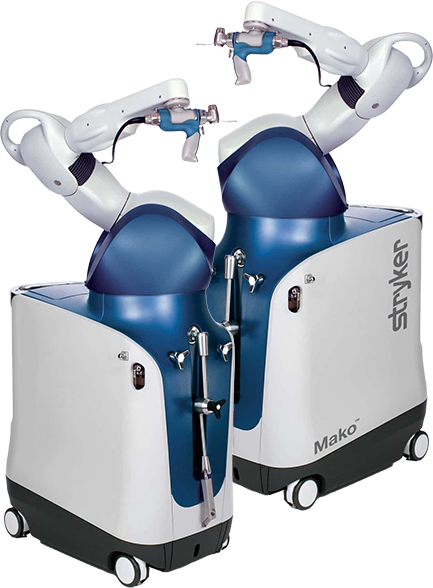
We also utilize advanced technologies such as robotic-assisted surgery, including systems like Mako SmartRobotics™, which allow for greater precision, improved implant placement, and better long-term outcomes. These innovations help reduce recovery time, improve joint alignment, and support a more natural feel after surgery.
What to Expect During Knee Replacement Surgery
Understanding the process can help you feel more confident about your decision. During knee replacement surgery, the damaged surfaces of the knee joint are carefully removed and replaced with high-quality implants made of metal and durable medical-grade plastic. The procedure typically takes one to two hours and is performed under anesthesia.
Following surgery, patients are closely monitored before beginning a structured recovery plan. Many patients are encouraged to start moving the knee shortly after surgery to promote healing and reduce stiffness. Our team provides guidance every step of the way to ensure a safe and successful experience.
Knee Replacement Recovery and Rehabilitation in Kansas City
Recovery is a critical part of achieving the best results from knee replacement surgery in Kansas City. Most patients begin walking with assistance within a day or two after surgery, and physical therapy starts soon after to improve flexibility, strength, and range of motion.
Over the following weeks, patients gradually increase activity levels, with many returning to normal daily routines within several weeks to a few months. Full recovery can take several months, depending on the individual, but the long-term benefits—including reduced pain and improved function—are significant.
Our orthopedic team works closely with each patient to create a personalized rehabilitation plan that supports healing, prevents complications, and maximizes long-term mobility.
Benefits of Knee Replacement Surgery
For many patients, knee replacement surgery in Kansas City, MO provides life-changing relief. The primary benefit is significant pain reduction, allowing patients to move more comfortably and participate in activities they once avoided. Improved mobility, increased joint stability, and enhanced overall quality of life are also common outcomes.
Patients often report being able to walk longer distances, return to low-impact exercise, and enjoy everyday activities without constant discomfort. Modern advancements in surgical techniques and implant design have made knee replacement surgery more effective than ever, with many implants lasting 15–20 years or longer.
Why Patients Trust Orthopedic Health of Kansas City for Knee Replacement Surgery
Choosing where to have your knee replacement surgery in Kansas City, MO is an important decision that can directly impact your recovery, mobility, and long-term results. At Orthopedic Health of Kansas City, patients benefit from decades of experience, advanced surgical technology, and a commitment to personalized orthopedic care.
Our board-certified orthopedic surgeons specialize in total knee replacement and partial knee replacement procedures, using proven techniques and innovative tools like robotic-assisted surgery to improve precision and outcomes. With multiple convenient locations and an integrated approach to care—from diagnosis to rehabilitation—our team ensures that every patient receives the attention and support they need at every stage of treatment.
We focus on delivering measurable results: reduced pain, improved joint function, and a faster return to daily activities. For patients seeking trusted, experienced providers for knee replacement surgery in Kansas City, Orthopedic Health of Kansas City remains a leading choice.
Mako SmartRobotics™ for the Knee
John Eggers, M.D., Ph.D. of Orthopedic Health of Kansas City now offers Mako SmartRobotics™ for total knee replacement surgery. This latest advancement in orthopaedics enables surgeons to provide each patient with a personalized surgical experience based on their specific anatomy.
How is Knee Injury Treated?
-
Rest and ice to reduce swelling and pain
-
Compression and elevation to manage inflammation
-
Physical therapy for strengthening and improving flexibility
-
Surgical interventions for more severe injuries, such as ACL reconstruction
Knee Diseases
Besides fractures and injuries, the physicians at Orthopedic Health of Kansas City are also experts in diseases and syndromes. Some of these include:
-
Bowed Legs
-
Burning Thigh Pain
-
Compartment Syndrome
-
Discoid Meniscus
-
Knee Tendon Bursitis
-
Runner’s Knee
-
Osgood-Schlatter Disease
-
Osteonecrosis of the Knee
Top Orthopedic Knee Doctors in Kansas City
If you have any of the symptoms mentioned above, please contact Orthopedic Health of Kansas City and make an appointment with one of our Kansas City knee and leg specialists.

Paul C. Cowan, M.D., M.P.H.
Specializing in Sports Medicine and injuries of the Knee & Shoulder

John Eggers, M.D., Ph.D.
Specializing in injuries of the Hip, Knee & Total Joint Reconstruction

Jon P. Hedgecock, M.D.
Specializing in Sports Medicine and Injuries of the Shoulder, Hip and Knee

Jeffrey Krempec, M.D.
Specializing in injuries of the Hip, Knee & Total Joint Reconstruction

Zachary Roberts, M.D.
Specializing in Trauma and injuries of the Hip & Knee

Christopher L. Wise, M.D.
Specializing in Trauma and injuries of the Hip & Knee

Dustin Woyski, D.O.
Specializing in Hip Preservation/Replacement and Robotic Knee Replacement
Frequently Asked Questions About Knee Replacement Surgery
How long does knee replacement surgery take?
Most knee replacement surgeries take about one to two hours. However, you should plan for additional time for preparation and recovery immediately after the procedure.
How long is recovery, and am I a candidate for knee replacement surgery in Kansas City, MO?
Recovery timelines vary, but most patients begin walking within a day or two after knee replacement surgery. Many return to normal daily activities within 4–6 weeks, while full recovery typically takes several months. You may be a candidate for knee replacement surgery in Kansas City, MO if you experience chronic knee pain, stiffness, or limited mobility that has not improved with non-surgical treatments such as physical therapy, medications, or injections.
What is the difference between total and partial knee replacement?
A total knee replacement replaces the entire joint, while a partial knee replacement targets only the damaged area. Your orthopedic specialist will recommend the best option based on your condition.
How long do knee replacements last?
Modern knee implants often last 15–20 years or longer, depending on activity level, overall health, and adherence to rehabilitation guidelines.
Will I need physical therapy after knee replacement surgery?
Yes, physical therapy is essential after knee replacement surgery to restore strength, flexibility, and mobility and to ensure optimal long-term outcomes.
When can I return to normal activities after knee replacement?
Most patients can resume light activities within a few weeks, but higher-impact activities may take longer. Your recovery plan will be tailored to your specific needs and goals.
Schedule a Consultation for Knee Replacement Surgery in Kansas City, MO
If knee pain is holding you back, it may be time to explore your options. The orthopedic specialists at Orthopedic Health of Kansas City are here to help you determine if knee replacement surgery in Kansas City, MO is right for you.
Contact us today to schedule a consultation and take the first step toward a more active, pain-free life.