


Knee
Knee Pain Specialist in Kansas City, MO, Lenexa, KS, and Independence, MO
Specialized Orthopedic Knee Injury Treatment in Kansas City, MO
At Orthopedic Health of Kansas City, we understand that knee injuries can significantly impact your life, whether you’re an athlete, a weekend warrior, or leading an active lifestyle. Our dedicated team specializes in diagnosing and treating a wide array of knee injuries, ensuring you get back to your routine with confidence.
What Causes My Knee Pain?
Knee pain is most commonly caused by osteoarthritis (wear-and-tear cartilage loss), ligament injuries such as ACL or meniscus tears, and overuse conditions like runner’s knee or patellar tendinitis. Because the knee bears two to three times your body weight with every step, even minor damage tends to worsen without treatment. A physical exam and imaging such as X-ray or MRI can identify the exact cause and guide the right treatment plan.
Knee injuries are prevalent due to the joint’s complexity and the daily stress it endures. Our clinic focuses on the most common types of knee injuries:
ACL Injuries: The anterior cruciate ligament, crucial for knee stability, often tears during sports involving sudden stops or direction changes.
MCL and PCL Injuries: The medial and posterior cruciate ligaments can be injured through direct impact or twisting movements.
Meniscus Tears: These involve damage to the knee cartilage, usually resulting from twisting or over-flexing the knee joint.
What Are The Symptoms of Knee Injury?
The most common symptoms of a knee injury are swelling, pain with weight-bearing, reduced range of motion, and difficulty fully bending or straightening the leg. A popping or snapping sound at the time of injury, the knee locking in place, or a feeling that the knee is giving out typically indicate ligament or meniscus damage that requires prompt evaluation.
Our board-certified knee pain specialists in Kansas City have provided knee pain symptom relief for over 30+ years with over 30,000+ knee pain treatments performed. Our pain specialists often notice the following type of common knee pain symptoms:
-
Pain and swelling in the knee
-
A popping or snapping sensation
-
Difficulty bending or straightening the leg
-
Instability or feeling like your knee is giving way
If you experience any of these symptoms following a knee injury, seeking medical attention is crucial. Early diagnosis and treatment can significantly improve recovery outcomes.
State-of-the-Art Diagnostic Techniques
Our clinic is equipped with advanced diagnostic tools, including X-rays and MRIs, to assess the extent of your knee injury accurately. This thorough evaluation is crucial for developing an effective treatment plan tailored to your needs.
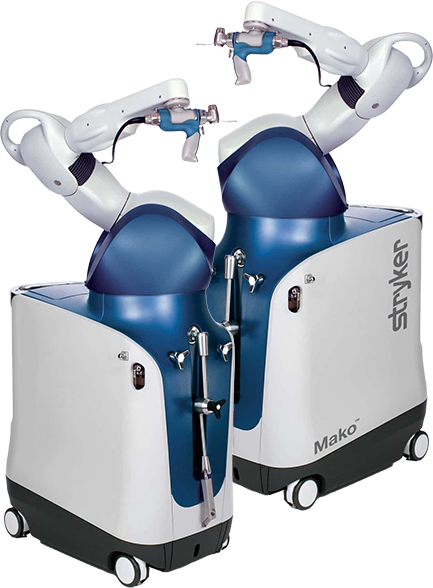
Mako SmartRobotics™ for the Knee
John Eggers, M.D., Ph.D. of Orthopedic Health of Kansas City now offers Mako SmartRobotics™ for total knee replacement surgery. This latest advancement in orthopaedics enables surgeons to provide each patient with a personalized surgical experience based on their specific anatomy.
How is Knee Injury Treated?
-
Rest and ice to reduce swelling and pain
-
Compression and elevation to manage inflammation
-
Physical therapy for strengthening and improving flexibility
-
Surgical interventions for more severe injuries, such as ACL reconstruction
Knee Diseases
Besides fractures and injuries, the physicians at Orthopedic Health of Kansas City are also experts in diseases and syndromes. Some of these include:
-
Bowed Legs
-
Burning Thigh Pain
-
Compartment Syndrome
Top Orthopedic Knee Doctors in Kansas City
If you have any of the symptoms mentioned above, please contact Orthopedic Health of Kansas City and make an appointment with one of our Kansas City knee and leg specialists.

Paul C. Cowan, M.D., M.P.H.
Specializing in Sports Medicine and injuries of the Knee & Shoulder

John Eggers, M.D., Ph.D.
Specializing in injuries of the Hip, Knee & Total Joint Reconstruction

Jon P. Hedgecock, M.D.
Specializing in Sports Medicine and Injuries of the Shoulder, Hip and Knee

Jeffrey Krempec, M.D.
Specializing in injuries of the Hip, Knee & Total Joint Reconstruction

Zachary Roberts, M.D.
Specializing in Trauma and injuries of the Hip & Knee

Christopher L. Wise, M.D.
Specializing in Trauma and injuries of the Hip & Knee

Dustin Woyski, D.O.
Specializing in Hip Preservation/Replacement and Robotic Knee Replacement
Knee Pain & Knee Injury FAQ
What typically leads to knee pain?
Knee discomfort can arise from ligament sprains, cartilage damage, overuse, or underlying joint disease. Injuries involving the ACL, MCL, PCL, or meniscus are common in sports, while conditions such as arthritis, bursitis, or tendon irritation often affect active adults and older individuals. Because the knee absorbs substantial force with every step, even small issues can quickly progress.
When should I see a knee specialist?
You should schedule a visit with a knee specialist if you notice persistent swelling, difficulty bearing weight, locking or catching of the joint, or a feeling that the knee might give out. A popping sensation at the moment of injury or inability to fully straighten the leg is another sign that professional evaluation is needed.
How do doctors diagnose knee problems?
Our orthopedic team performs a detailed exam of the knee and may use X-rays, MRI, or other imaging to assess ligaments, cartilage, bone alignment, and surrounding soft tissues. This helps determine whether the issue involves structural damage, inflammation, or a mechanical imbalance.
What treatment options are available for knee injuries?
Treatment plans for knee injuries vary widely. Some patients improve with rest, bracing, targeted physical therapy, or anti-inflammatory medication. More advanced injuries—such as significant ligament tears or meniscus damage—may require surgical options, including arthroscopy or ACL reconstruction. Robotic-assisted knee replacement may be recommended for severe arthritis.
What does knee rehabilitation involve?
Recovery for knees focuses on rebuilding muscular support, restoring motion, and improving joint control. A tailored plan supports safe return to sports, work, and daily activity.
Can knee injuries be prevented?
Strength training, proper warm-ups, good footwear, and avoiding sudden increases in activity can help lower knee injury risk.